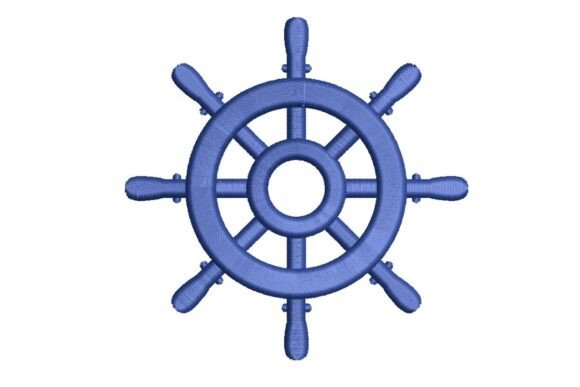
Nautical Ship’s Wheel Embroidery Design
A Timeless Symbol with Real Business Versatility
As an embroidery designer who’s developed hundreds of commercial designs for small businesses—from coastal cafés to handmade pet brands—I immediately recognize the quiet authority of the Nautical Ship’s Wheel Embroidery Design. It doesn’t shout. It steers. That first impression—classic, grounded, and quietly confident—is exactly what makes it a standout choice for branded merchandise. It reads as professional yet approachable, timeless without feeling dated, and nautically inspired without veering into kitsch. For businesses in the Beach category—or any brand that values guidance, journey, or craftsmanship—it signals intentionality and care.
Where This Design Earns Its Keep on Real Merchandise
The Nautical Ship’s Wheel Embroidery Design thrives where authenticity meets utility. On staff aprons for a seaside bakery? Yes—it adds artisanal credibility without overwhelming the fabric. As a chest patch on cotton work shirts for a boutique florist with ocean-inspired branding? Absolutely—it reinforces a cohesive visual story. As a cap embroidery accent for a local surf school or coastal tour company? It scales beautifully when digitized thoughtfully, holding detail at 2.5–3 inches wide. And on reusable tote bags for a handmade studio? It becomes a subtle signature—recognizable, repeatable, and rooted in meaning.
It also works exceptionally well as an embroidered patch for sew-on application: think uniform sleeves for a marine-themed gift shop, luggage tags for a travel planner, or even stitched onto woven product labels for artisan soaps or candles. Because the wheel’s structure—central hub, radial spokes, and balanced handles—lends itself to symmetrical stitch placement, it performs reliably across varied hoop sizes and fabric types used in custom apparel and small business merch.
Use With Intention—Not Just Decoration
This isn’t a “set and forget” design. Its strength lies in context—and its limitations become clear under specific production conditions. Avoid placing the Nautical Ship’s Wheel Embroidery Design smaller than 1.75 inches tall on curved surfaces like cap fronts unless you’ve confirmed the digitization maintains spoke clarity and hub definition. High stitch density around the central hub can cause puckering on lightweight knits or textured fabrics like canvas tote bags—so always test on your target material first.
Dark uniforms? Prioritize high-contrast thread colors: navy thread on light chambray reads cleanly; white or ecru on charcoal may require underlay adjustment. And if your brand uses fine-line typography alongside this design (e.g., a tagline wrapped around the wheel), verify spacing and legibility at final size—tiny lettering rarely survives dense fill areas. Remember: what looks elegant in a digital preview may blur under needle and thread.
How It Shapes Brand Identity—Beyond Aesthetic
Small business owners often underestimate how much a single emblem influences perception. The Nautical Ship’s Wheel Embroidery Design subtly communicates stability, direction, and legacy—qualities customers associate with trustworthy service and handmade quality. When repeated across aprons, caps, and packaging accents, it builds visual consistency without monotony. Unlike trend-driven motifs, it avoids dating your design assets, letting your core offerings—not the logo—stay front and center.
For Etsy sellers and craft-based brands, it adds perceived value: a well-executed wheel signals attention to detail and investment in presentation. Customers engage more deeply with merchandise that feels intentional—not generic. That translates directly to higher perceived product value, repeat purchases, and organic word-of-mouth among niche communities (think coastal makers’ markets or sailing clubs).
Practical Designer Notes Before You Stitch
Before committing to bulk production, treat the Nautical Ship’s Wheel Embroidery Design like any critical digital embroidery file:
- Test in black and white first. Eliminate color bias—does the shape hold weight and balance without hue support?
- Verify small-patch viability. Resize it to 1.5" and inspect spoke separation and hub clarity. If lines merge, request a simplified version or adjust density.
- Review thread color contrast on your actual fabric. Swatch it—not just on screen. Light threads on dark backgrounds need extra underlay; dark on light may require tighter satin edges.
- Inspect spacing and isolation. Ensure no part of the wheel bleeds too close to seam allowances or edge finishes—especially on patches meant for sewing.
- Confirm hoop size compatibility. Does the design fit comfortably within your standard hoops? Oversized versions may require rehooping or special frames.
- Test on real fabric with proper stabilizer. A medium-weight cutaway works best for structured items like caps and patches; tear-away suffices for stable cotton aprons.
- Create a printable mockup for client approval. Show scale, placement, and thread palette in context—not just as a flat file.
- Compare beside other design assets. Does it harmonize with your current logo, typography, and secondary icons? Consistency strengthens recognition.
- Confirm commercial licensing. If sourcing from a third-party marketplace, ensure the embroidery file permits use on goods sold to end customers—no exceptions.
Final Thought: Steer With Purpose
The Nautical Ship’s Wheel Embroidery Design is more than a maritime motif—it’s a functional tool for building brand cohesion, elevating handmade presentation, and anchoring customer trust. Used deliberately—as a chest accent, sleeve patch, or tote bag signature—it reinforces professionalism without sacrificing warmth. For embroidery shops, apparel decorators, and small business owners alike, it’s proof that the right machine embroidery design doesn’t just decorate—it directs. Choose it not because it’s nautical, but because it navigates your brand toward clarity, consistency, and quiet confidence.