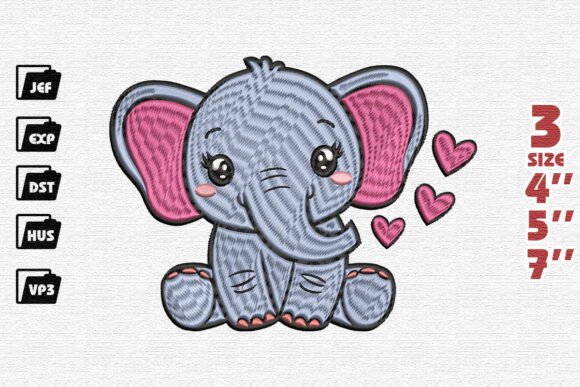
Cute Baby Elephant with Hearts Embroidery Design
First Impression: Instant Charm, High-Engagement Cuteness
As an embroidery designer who’s prepped over 200 craft fair booths, I can tell you—Cute Baby Elephant with Hearts Embroidery Design lands exactly where it needs to: in the “aww” zone. It’s not rustic, not minimalist, not vintage—it’s pure kawaii-inspired sweetness. Big sparkling eyes, blushing cheeks, and three little hearts? That’s emotional resonance in stitch form. At a glance, it reads as joyful, gentle, and gift-ready—ideal for baby showers, new parent gifts, or anytime someone wants to share love without words. Customers at handmade markets don’t pause to analyze; they feel. And this design makes them smile before they even read the price tag.
Where It Shines: Craft Fair Product Pairings That Sell
This machine embroidery design excels where cuteness meets utility. On a natural canvas tote bag? Perfect—centered above the pocket or scaled slightly larger on the front panel, it becomes an instant conversation starter. For apron embroidery, place it just below the waistband on the left chest: soft, approachable, and unmistakably handmade. Tea towel embroidery works beautifully too—especially on light linen or cotton blends—where the hearts and facial details pop without competing with texture.
As an embroidered patch? Highly effective. Stitch it onto denim jackets, baby bibs, or organic cotton onesies—its compact shape and clear silhouette hold up well when fused or sewn on. Small fabric pouches and pillow covers also benefit: the elephant reads clearly at 3–4 inches wide, making it ideal for giftable handmade items that sit neatly on market shelves or Etsy listings. And yes—it photographs exceptionally well for printable mockups. The contrast between soft curves and crisp heart shapes translates cleanly across devices, boosting click-through for online sellers.
Production Realities: Speed, Clarity, and Batch-Friendly Flow
From a production standpoint, Cute Baby Elephant with Hearts Embroidery Design is refreshingly straightforward. No tiny lettering, no intricate script, no overlapping fine lines that vanish at 2.5 inches. That means faster hooping, fewer thread breaks, and reliable repeatability across dozens of tote bags or tea towels. It scales cleanly both up (for pillow covers) and down (for patches or cap fronts), though I recommend keeping it no smaller than 2.75 inches wide to preserve cheek blush and eye sparkle.
The design feels intentionally balanced—not too dense, not too sparse. Still, always inspect stitch density before bulk runs. Areas like the eyes and hearts may carry tighter fills; test on your target fabric first. If embroidering on textured towels or thick canvas, use a medium-cutaway stabilizer—not tear-away—to prevent puckering and maintain shape. And never skip the scrap-fabric test: thread contrast matters. Light gray thread on ivory linen reads softly; neon pink on charcoal cotton reads boldly. Choose intentionally.
Smart Placement Notes for Maximum Impact
- Tote bags: Centered 4–5 inches from the top seam—creates visual weight without overwhelming the bag.
- Aprons: Left chest placement (not centered) feels more personal and artisanal—perfect for small shop product branding.
- Caps: Use only on structured front panels; avoid curved crowns unless you’ve confirmed hoop compatibility and stitch behavior on curved surfaces.
- Dark fabric: Opt for high-contrast thread—white or pale blush—with satin-stitch eyes for maximum clarity.
- Patches: Back with iron-on fusible web *and* secure with a tight zigzag edge stitch—this design’s charm shouldn’t peel off after one wash.
Booth & Brand Power: Why This Design Builds Your Handmade Identity
In a crowded craft fair aisle, Cute Baby Elephant with Hearts Embroidery Design strengthens your booth’s visual cohesion—especially if you lean into soft palettes, natural fibers, and heartfelt gifting. It pairs effortlessly with other Baby Animals embroidery themes, but stands strong alone as a signature motif. Buyers remember consistency: seeing the same sweet elephant on a tea towel, a pouch, and a onesie tells them you’re intentional—not just assembling random designs.
It also elevates perceived value. Unlike generic florals or abstract motifs, this design carries narrative warmth. Customers associate it with care, tenderness, and celebration—making your finished product feel more meaningful, not just decorative. That emotional lift translates directly to higher average order value, especially among Etsy sellers and boutique makers curating thoughtful collections.
Designer-to-Designer Checklist Before You Cut Fabric
- Test the digital embroidery file on scrap fabric matching your final product’s weight and texture.
- Confirm thread colors align with your brand palette—don’t default to manufacturer suggestions without comparing swatches.
- Review spacing between elements: ensure hearts don’t merge into cheeks or ears at smaller sizes.
- Verify hoop size compatibility—especially for caps or curved items where space is limited.
- Inspect stitch density in the eyes and hearts; adjust underlay if needed for stability on stretchy or napped fabrics.
- Use the right stabilizer: cutaway for knits and towels, tear-away for stable wovens like quilting cotton.
- Create at least one real-world mockup—not just a digital preview—to assess scale, balance, and tactile appeal.
- Compare how the design reads across multiple fabric colors (ivory, oat, charcoal, blush) before committing to inventory.
- Confirm commercial licensing terms—this is essential for any commercial embroidery or resale of finished products.
Bottom line: Cute Baby Elephant with Hearts Embroidery Design isn’t just another cute animal motif. It’s a carefully tuned, emotionally intelligent embroidery file built for real-world selling—whether you’re stitching samples for Saturday’s craft fair, uploading to Etsy, or building a cohesive line of small shop products. It delivers charm on demand, stitches reliably, and connects with buyers in ways that boost both engagement and revenue. Just remember: great design deserves thoughtful execution. Test, tweak, and trust your instincts—then let that baby elephant do the rest.