Maple Leaf Fall Embroidery Design
First Impression: Warm, Timeless, and Instantly Recognizable
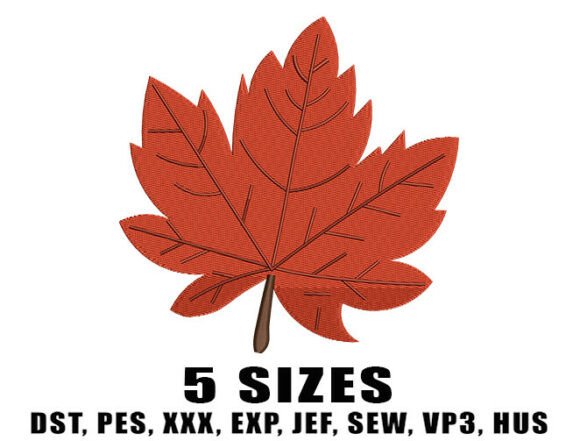
As an embroidery designer who’s prepped over 200 craft fair booths—from snowy holiday markets to sun-drenched summer fairs—I opened Maple Leaf Fall Embroidery Design expecting seasonal charm. What I got was something sharper: a confident, clean maple leaf silhouette with balanced negative space and natural curvature. It reads as elegant rustic, not kitschy or cartoonish—ideal for buyers who want autumn spirit without shouting “FALL!” in glitter font. No pumpkins, no acorns, no “Hello, Pumpkin” script. Just one strong, graceful leaf. That restraint is its biggest strength at a crowded handmade market.
Where It Shines on Craft Fair Products
This design doesn’t need gimmicks—it earns attention through thoughtful placement and material pairing:
- Tote bag design: At 5.8" (Size 3), it anchors the lower corner of a natural canvas tote beautifully—visible but not overwhelming. Customers pause, tilt their head, and say, “Oh, that’s lovely.” Not “What is that?”
- Apron embroidery: Centered above the pocket at 4.8" (Size 2) on a linen-cotton blend? Perfect. It feels intentional, artisanal—not like a sticker slapped on.
- Tea towel embroidery: On a cream or oatmeal flour-sack towel, the 3.8" version (Size 1) works as a subtle, high-end accent near the hem. No competing with stripes or prints—just quiet, seasonal sophistication.
- Embroidered patch: Sized at 3.8"–4.8", this design holds crisp detail when heat-applied or sewn onto denim jackets or market bags. The leaf veins read clearly even after washing.
- Pillow cover & small pouch: At 5.8" or 6.8", it becomes a focal point—especially on textured oat or charcoal linen. The proportions fill space without crowding.
What Makes It Sell—Beyond the Stitch
At a craft fair, people don’t buy embroidery files—they buy feeling. Maple Leaf Fall Embroidery Design delivers warmth, nostalgia, and quiet confidence. It photographs exceptionally well for Etsy listings: soft shadows, clear edges, and natural color contrast mean your mockups look professional—even without Photoshop. And because it’s offered in five sizes (3.8" to 7.8"), you can scale it across product tiers: small pouches ($24), tea towels ($32), and premium pillow covers ($48) — all under one cohesive visual language.
For batch production? Yes—it’s repeatable. No tiny lettering, no nested curves that snag needles, and no dense fill areas that cause thread breaks on mid-tier machines. That means fewer stops, less rehooping, and consistent quality across 50+ tote bags before Saturday morning.
Careful-Use Notes Every Designer Should Check
Even elegant designs have limits—and skipping these checks risks disappointing customers:
- Avoid Size 1 (3.8") on dark fabric unless you use bright, high-contrast thread (e.g., gold or mustard on navy). Fine outer edges may blur.
- Don’t use Size 5 (7.8") on curved cap surfaces—the distortion flattens leaf definition. Stick to Sizes 2–3 for headwear.
- Test stitch density on textured towels: Heavy terry or waffle weave can swallow fine details. A light tear-away stabilizer + medium-weight cutaway combo helps preserve clarity.
- Small shop product tip: Skip using Size 1 on ultra-thin silk or rayon—stitch tension pulls easily. Reserve it for stable cottons and linens.
How It Elevates Your Booth & Brand
In a sea of plaid, burlap, and pumpkin motifs, Maple Leaf Fall Embroidery Design stands out by being refined, not loud. When grouped with neutral-toned products—oat-colored aprons, unbleached muslin pouches, warm-gray pillow covers—it builds instant brand consistency. Buyers remember your table as “that calm, beautiful booth”—not “the one with all the leaves.”
It also boosts perceived handmade quality. Because the shape is organic yet precise, customers assume skilled digitizing—and they’re right. That perception raises price tolerance and encourages repeat visits (“I’ll come back for your winter collection”). Even as a printable mockup, it conveys intentionality: no stock clipart energy here.
Practical Embroidery Designer Notes Before You Cut Fabric
Before stitching your first craft fair product, do these six things:
- Run a test on scrap fabric matching your final product—especially if using textured tea towels or thick canvas.
- Check thread contrast: goldenrod or burnt sienna on cream linen reads richer than olive green on beige.
- Review spacing between leaf lobes—tight gaps may close up on dense fabric. Zoom in on your embroidery software.
- Confirm hoop size compatibility: Sizes 4–5 may require a 6x10" or larger hoop. Don’t assume your machine handles 7.8" without verifying.
- Choose stabilizer wisely: lightweight cutaway for knits, tear-away for stable wovens, and fusible for patches.
- Create at least one real mockup—not just a digital preview. Hold it in natural light. Does the leaf “pop” or disappear into the background?
And crucially: confirm commercial licensing before selling finished products. The listing says “perfect for autumn and seasonal crafts,” but only the file provider can clarify if your tote bags, patches, or Etsy listings fall under permitted use. When in doubt, email them—craft fair income isn’t worth a copyright notice.
Final Thought: A Quiet Anchor for Autumn Sales
Maple Leaf Fall Embroidery Design isn’t flashy—but it doesn’t need to be. In the handmade economy, trust is built through consistency, clarity, and care. This embroidery file delivers all three. It works as a small accent or bold statement, photographs with ease, scales cleanly across product types, and carries emotional weight without cliché. For Etsy sellers, boutique makers, and craft fair veterans alike, it’s not just another autumn design—it’s a reliable, repeatable, revenue-ready asset. Just remember: test, stabilize, contrast, and confirm. Then let the leaf speak for itself.